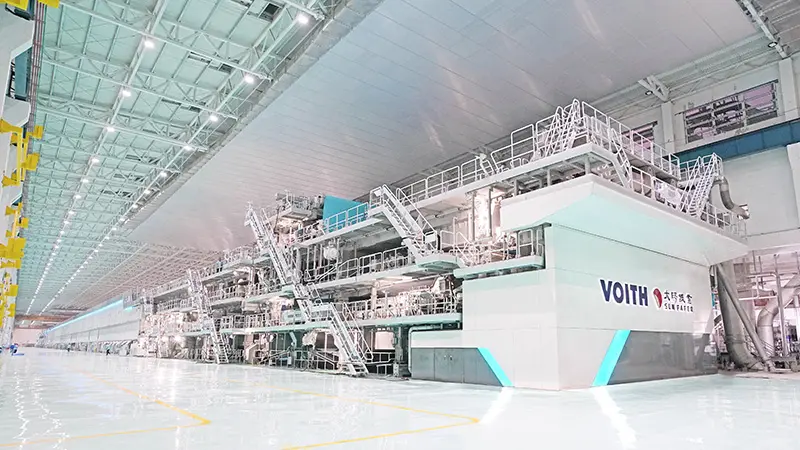
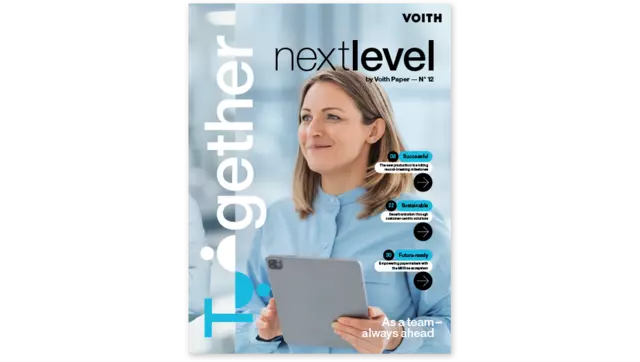
The leading full-line supplier to the paper industry
Discover Voith Paper
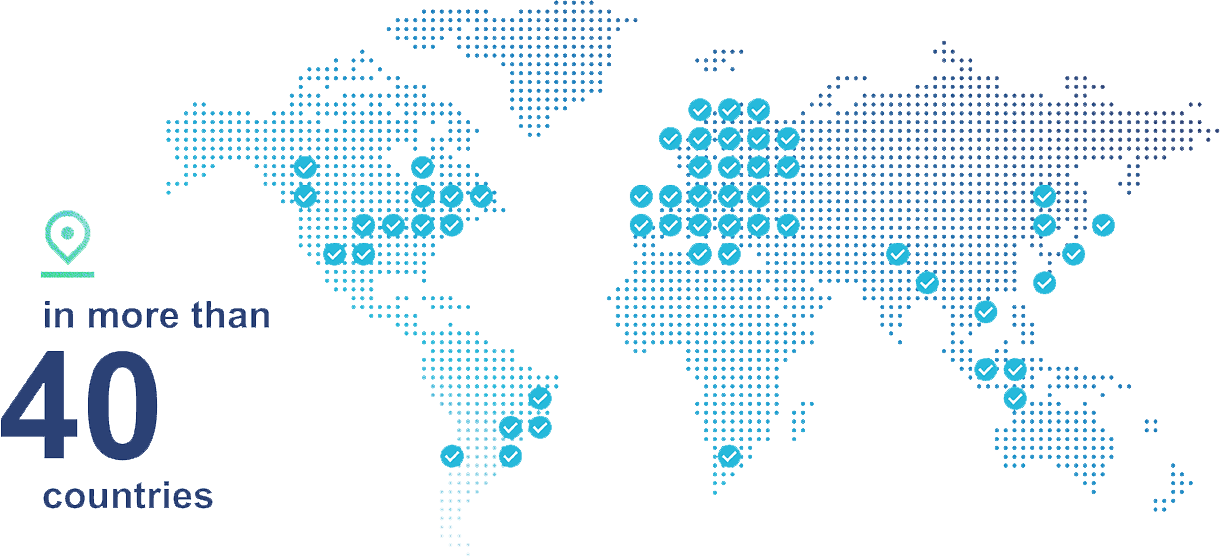
Our business are solutions for first-class papermaking. No matter what grades, what conditions and objectives you have - we are there for you. Worldwide.
Our dedicated Voith team provides you with individual support, whether you are interested in new lines or rebuilds, entire machine sections or special spare and wear parts as well as automation and digitalization applications. With our customized concepts, you will achieve your business goals faster, more efficiently and more sustainably. Get to know Voith and contact us!
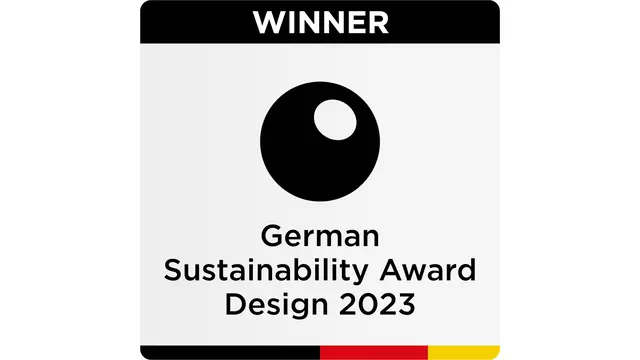
Voith Paper's XcelLine paper machines won the third German Sustainability Award (DNP) in the Design competition, Vision category. Already today, Voith's XcelLine paper machines are characterized by significantly reduced energy consumption, increased utilization of the paper fiber's potential, and significantly reduced water consumption. Voith Paper's visionary design study for the paper production of the future strives for CO2-neutral paper production that relies on alternative energy sources and does not require fossil fuels.
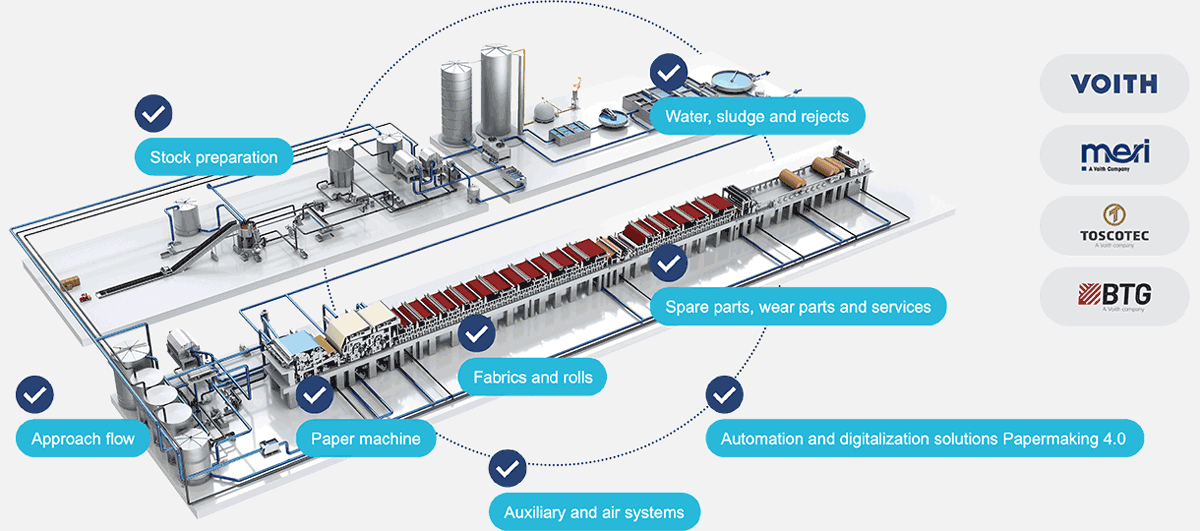
As the leading full-line supplier, we are providing customer-centric solutions from a single source for an efficient and sustainable papermaking process. By offering holistic project packages that not only combine a unique product portfolio, services and digitalization but also comprise project management and consulting, we assume the comprehensive project responsibility for you and significantly reduce complexity and interfaces.
You can find out everything about our paper machine concepts on our XcelLine website. The BlueLine page contains all information about the stock preparation concepts. Visit our AquaLine website to discover our sustainable water management concepts for maximum water savings. You can find everything to do with ventilation systems on the Air Systems page and we have bundled the digital topics on the Papermaking 4.0 website. Finally, you will find all of our services for papermaking on the Servolution page.
It is our responsibility as a full-line supplier to secure the lowest resource consumption. That is why we have launched our sustainability program "Papermaking for Life". We develop innovations that help you minimize the carbon footprint and reduce water and fiber consumption in the papermaking process.
On our specially created Sustainability page, you can find out which products and solutions we offer for sustainable papermaking. A key success factor for sustainable paper production is professional water management. Our sustainable AquaLine concepts significantly reduce fresh water consumption and effluent flow, find out more on our AquaLine website. The website Research and Development shows which innovations we are working on and which product tests can be carried out where.
In order to increase our customers’ machine availability and production efficiency, we provide you with advanced services and state-of-the-art digital technologies. Our efficient processes ensure an easy customer journey and convincing user experience. With our leading automation and digitalization solutions from the Papermaking 4.0 portfolio, your paper production process is made more efficient, stable and predictable. And we support you in reducing your total cost of ownership with customized, results-oriented service packages – treading the path towards the most efficient paper production plant.
Find out everything about our IIoT Platform OnCumulus. On this page you will also find information about the OnEfficiency product family, which can support you in efficient paper production. You can find our service portfolio on the Service page as well as all digital topics regarding papermaking on the Papermaking 4.0 website.
With our in-depth know-how of the papermaking process, we support our customers in maximizing machine availability and avoiding unplanned downtime. This is achieved primarily by ensuring fast availability of spare parts. Our customers can select the products that are right for them from a range of over 130,000 different spare parts and at the same time benefit from an efficient and digital procurement process.
Service
Every day brings new challenges. We help you to master them successfully. Anytime. Anywhere. Our global service network offers a wide range of customized services with highly qualified experts on site. Our service-oriented infrastructure guarantees short response times and local contacts. You can reach an expert near you around the clock via our service hotline.
Wear parts
Our goal is to deliver superior and more competitive wear parts that will help our customers to achieve their demanding runability and paper quality targets. Our products also contribute to more sustainable paper production through reduced energy and water consumption and lower fiber losses.
Digital solutions
For more than five years, customers worldwide have relied on our Papermaking 4.0 portfolio. Join us in shaping the paper production of the future and benefit from the enormous efficiency, quality and productivity potential and the far-reaching competitive advantages offered by digitalization in the paper industry.
Let's make papermaking digital!
Rebuilds
Together with our customers, our experts develop customized rebuild solutions with innovative components to increase the efficiency and competitiveness of existing machines. These can be supplemented by suitable spare and wear parts packages and service concepts.
Product and service finder
Finding a specific product or service has never been easier! All you need to do is to enter a keyword or product name or simply use the filters to get more information about the needed product or service.
We are your expert for all paper grades
Voith Paper is your partner for optimized paper production. We serve all types of paper and have unbeatable industry knowledge thanks to strong partnerships such as BTG and Toscotec.
Cartonboard
From packaging to advertising medium
As the base material for a range of high-quality packaging options, cartonboard is omnipresent. It plays an especially large role as packaging in the modern world. Beverages, shoes, toys and cosmetics – they are all packed in various grades of cartonboard, and they all have different requirements for the raw material.
As a leading supplier to the paper industry, our cartonboard machines offer excellent formation, maximum dry contents, optimum web guiding and superlative runability.
In an era of growing e-commerce, packaging solutions made from containerboard are becoming increasingly important. Together with cartonboard, containerboard constitutes the largest portion of packaging material, even more than glass, metal or plastic. It is multi-purpose, clean and flexible.
As a full-line supplier for containerboard machines, we provide efficient yet resource-conserving solutions, such as production based on 100 percent recovered paper.
Besides well-known grades like newsprint, paper machines also produce paper for tea bags, bank notes, wallpaper and décor coverings for furniture. As the demand rises for alternatives to the mostly plastic-based packaging used for food and confectionery, new types of flexible packaging papers that are recyclable and have barrier properties – such as aroma- and grease-proofing – have been developed.
It takes a very special kind of expertise to manufacture specialty papers. This is why for each specialty paper, our production technologies are tailored to the specific application.
For centuries, the great merit of graphic paper as a carrier of information has been as a storage medium for knowledge. All information is valuable, no doubt, but the paper on which it is printed can sometimes vary greatly.
Voith's high-speed machines make it a global leader, especially in the area of newsprint and magazine paper.
Tissue papers improve our everyday lives. They are tear-resistant, highly absorbent, soft and sanitary. Due to improved standards of living and hygiene, the global consumption of products such as paper handkerchiefs, kitchen towels, napkins and toilet paper is increasing rapidly.
Therefore, manufacturers need a reliable partner. Together with its partners Toscotec and BTG, Voith is your supplier and partner for successful tissue paper manufacturing.
In a visionary design study, Voith is designing the paper production line of the future. The vision takes account of all important aspects for a well-balanced overall concept with focus on improved efficiency and increased ease of maintenance.
We’re proud that everyone across our worldwide organization is keen to step up and take responsibility for our impact on the planet and society. Discover why our PaperHeroes share and identify with our purpose.
Do you have a question or need advice? We are always happy to help! Please send an email or give us a phone call. Together we will find the right solution for you and your application.
Subscribe to our newsletter and stay informed about news in the world of Voith Paper
Always get the latest updates on new products and services, projects, campaigns and success stories as well as upcoming exhibitions and conferences – straight to your inbox.